

What you need to know
- A major flash flood struck northern Nepal on 26 August, destroying homes, roads, bridges and vital infrastructure.
- The flood was reportedly triggered by a glacier collapse near the Nepal-Tibet border, sending mud, ice and rock into the Bhote Koshi River.
- At least 1,000 people have been killed and more than 4,200 are missing, with the death toll continuing to rise.
- Villages including Manakamana and Khadga Bhanjyang have been largely destroyed.
- An estimated 90,000 people have been affected, including 22,100 children.
- Many thousands of people may have lost or damaged homes, creating significant shelter needs across affected communities.
- More than 20,000 personnel have been mobilized to support search and rescue efforts across affected areas.
- Damaged roads, destroyed bridges, remote mountain terrain and the risk of further flooding are making it difficult to reach affected communities.
What is happening in Nepal?
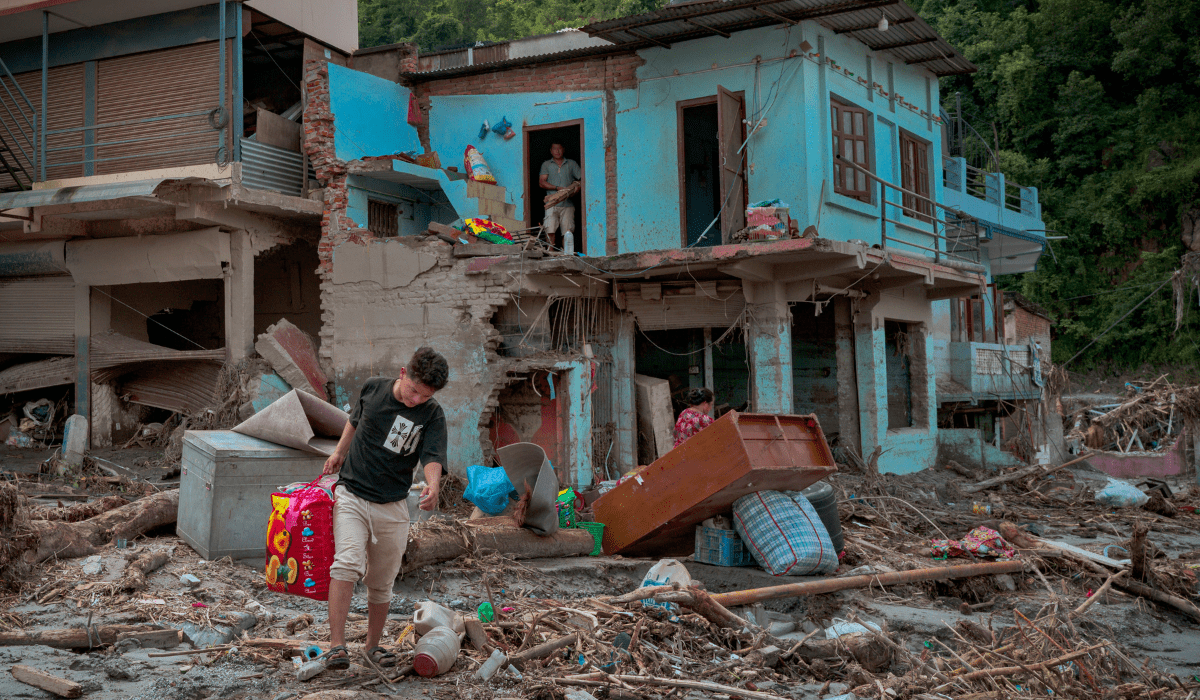
On 26 August, devastating flash floods swept through northern Nepal, affecting the districts of Rasuwa, Nuwakot and Dhading near the border with Tibet. Homes, roads, bridges and buildings were swept away, while key infrastructure, including power facilities, suffered significant damage. Communities across the mountainous region have been cut off, making rescue efforts and access to support more difficult.
The sudden and intense surge of water was reportedly caused by a glacier collapse around 17,000 feet high in the Himalayas, near the Nepal-Tibet border. Mud, ice and rock reportedly surged into the Bhote Koshi River from the Tibet side of the border, creating a powerful torrent that traveled downstream through communities in both Nepal and Tibet. Villages including Manakamana and Khadga Bhanjyang were among the hardest hit, with reports suggesting some settlements have been almost completely destroyed.
According to local authorities, at least 1,000 people have been killed, and more than 4,200 are missing. More than 600 of those missing are believed to be workers trapped within a network of mud-filled tunnels at hydropower sites along the Trishuli River.
In Nepal alone, an estimated 65,000 people have been affected, including 22,100 children, across Rasuwa, Nuwakot, Dhading, Gorkha and Tanahun districts.
Government-led search and rescue efforts have mobilized more than 20,000 personnel across affected areas. Rescuers are relying heavily on helicopters as difficult terrain, persistently high flood waters and severe damage to roads and bridges continue to hamper access to affected communities.
Authorities have warned that rising water levels could still threaten downstream areas, while experts from the International Centre for Integrated Mountain Development (ICIMOD) have raised concerns about the risk of secondary flooding caused by debris that has entered river systems.
Donate now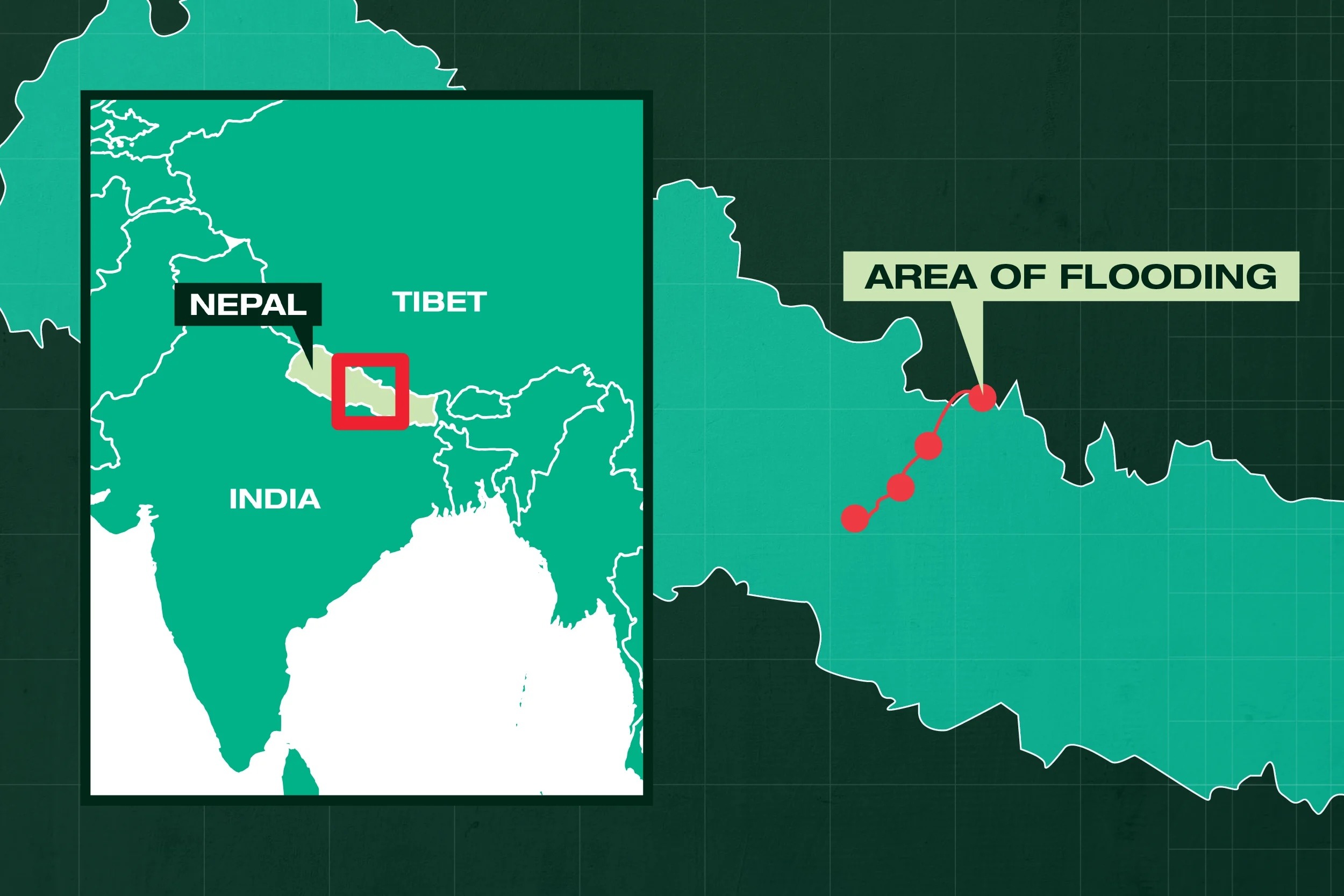
How is ShelterBox responding?
ShelterBox is responding in Nepal, and 1,000 families have now received essential aid. Following assessments of the most urgent needs, our team is working alongside local partners, including Rotary, to support families affected by the devastating floods.
Many thousands of people have lost or damaged homes, leaving families displaced and in need of safe shelter and essential household items. So far, 1,000 families have received tarpaulins and essential household items, including sleeping mats, rope, and pillows. Additional shelter aid, including family tents, winterization kits, blankets, and solar lights, has also arrived to support families as the response continues.
Damaged roads, destroyed bridges, remote mountain terrain, and the continued risk of flooding are making access to some of the worst-affected communities challenging. Despite these obstacles, ShelterBox and our partners are continuing to reach families with the shelter and essential aid they need.
Donate today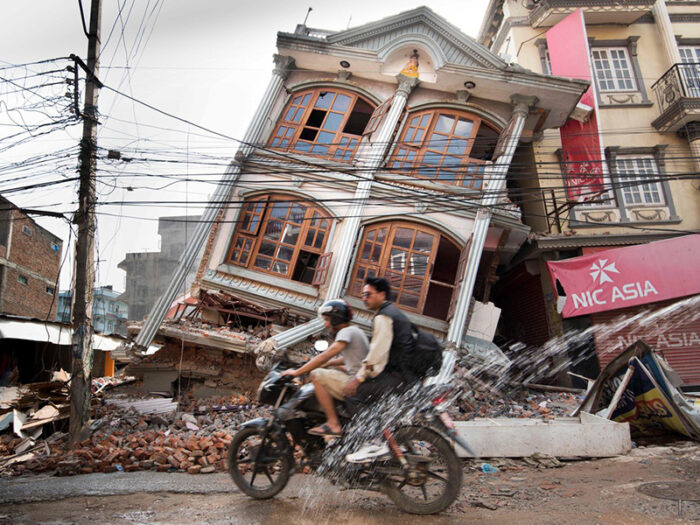
Has ShelterBox responded in Nepal before?
ShelterBox responded in Nepal after a devastating 7.8 magnitude earthquake struck the country in April 2015, destroying hundreds of thousands of homes and leaving many families without safe shelter. This was followed by a second major earthquake in May 2015.
Working alongside Rotary, Nepal Red Cross, Asal Chhimekee Nepal and other local partners, we supported almost 68,000 people with emergency shelter and essential aid items. We also provided training and technical guidance to help families use shelter kits and rebuild stronger, more durable homes.
The response highlighted the importance of both immediate shelter and longer-term recovery support, helping communities begin rebuilding their lives after one of Nepal’s deadliest disasters in recent history.
How to support people after disaster
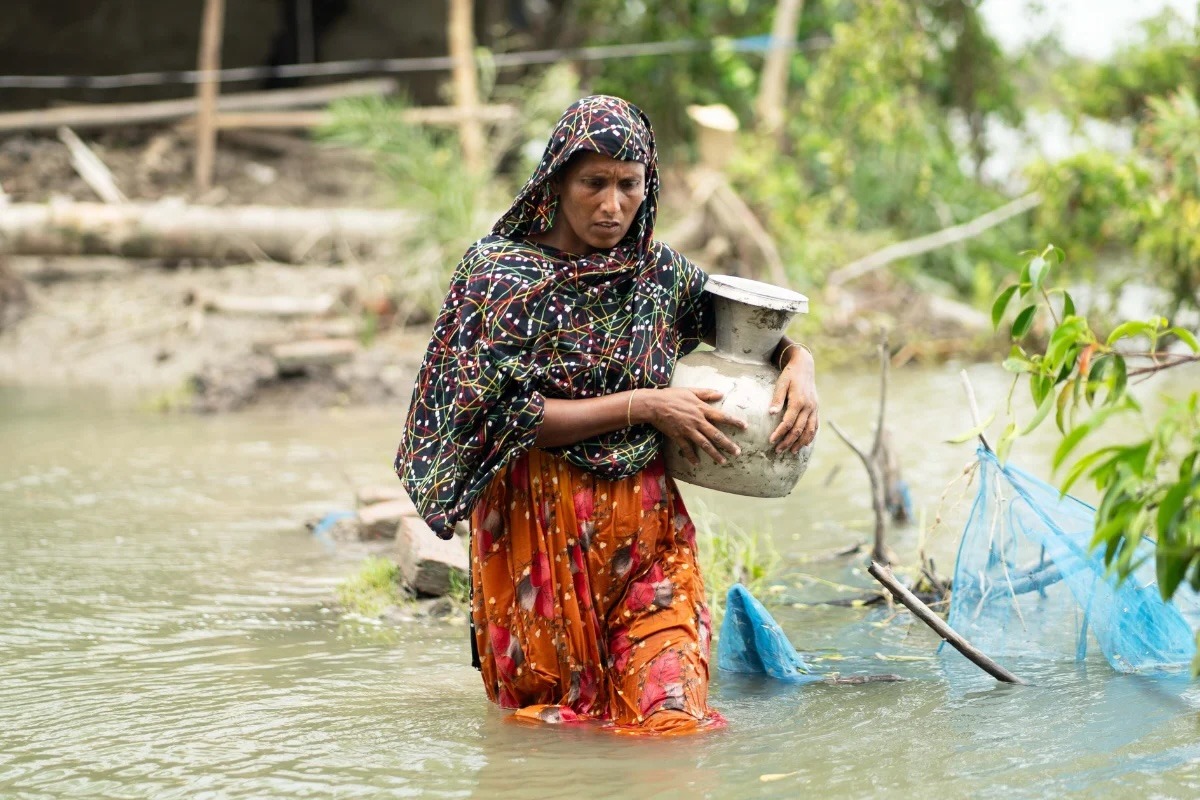
When disaster strikes, families can lose their homes, belongings, and sense of security in a matter of moments.
Your support helps ShelterBox provide emergency shelter and essential aid to people affected by disasters like floods in Nepal and around the world. It also helps us prepare before disaster happens, so support can reach families when they need it most.
Donate today and help ensure families have the shelter, safety and stability they need to begin recovering after disaster.
Donate today