Donate
Support our work and help families rebuild their homes and their lives.

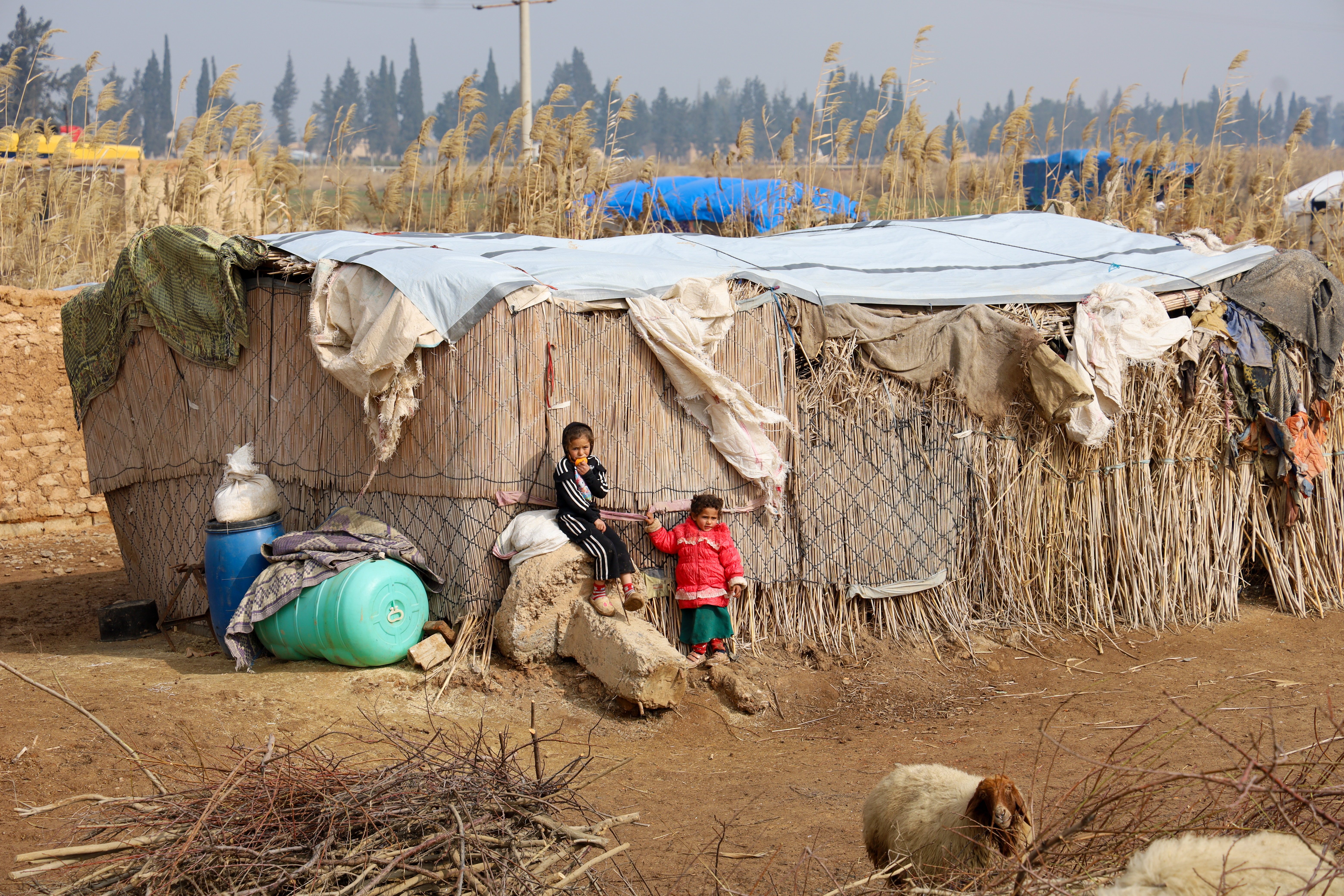
In an informal displacement camp in rural Syria, worn-out tents stand crowded together as vast agricultural fields stretch into the distance. Here, the ground cracks under the summer heat and then turns to thick, clinging mud during the rainy season.
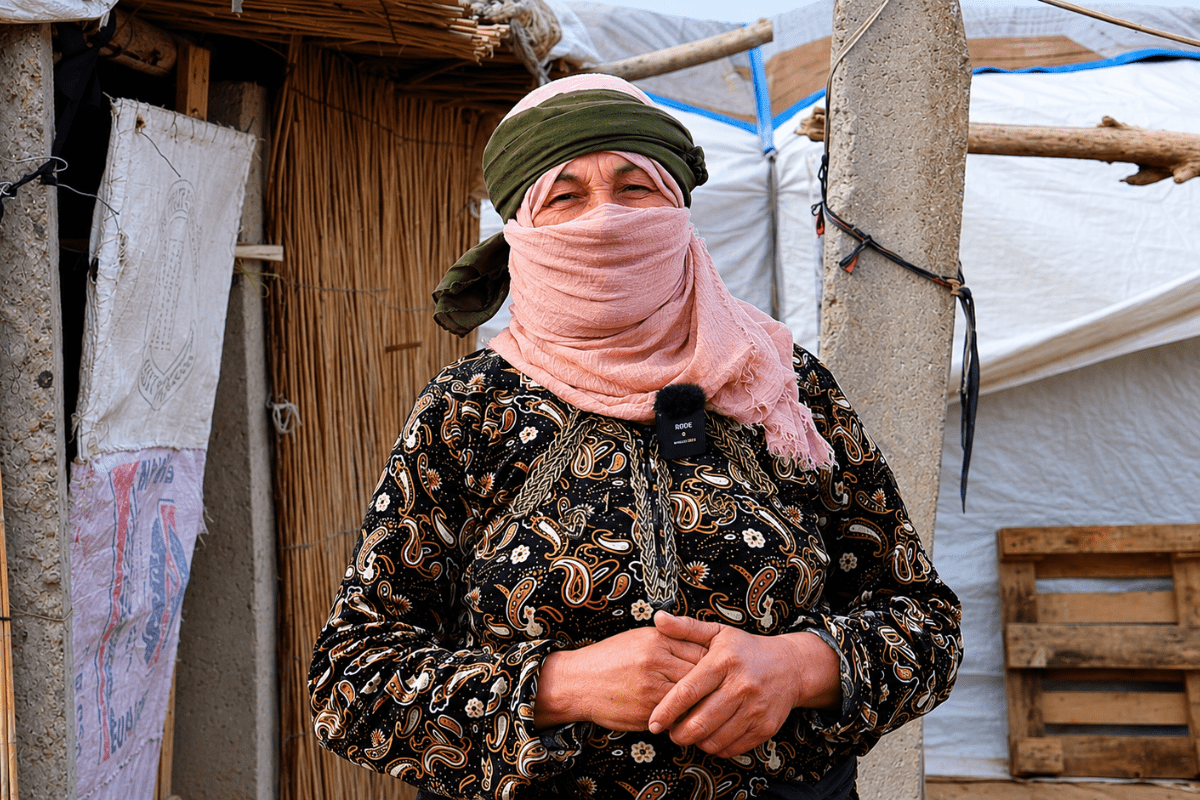
It is here that Umm Ismail, a mother of eight, holds her family together with quiet determination. Strength is not a choice but a necessity when facing the prolonged hardship of life in a camp like this.
War forced her and her family from their village, leaving their home in ruins. What they thought would be a temporary escape has stretched into years of uncertainty.
“We have been here in this camp for 6-7 years,” Umm Ismail says.
Finding relative safety in this rural area came at a cost, for they had to start again, searching for any work available. The nearby farmlands became their only option.
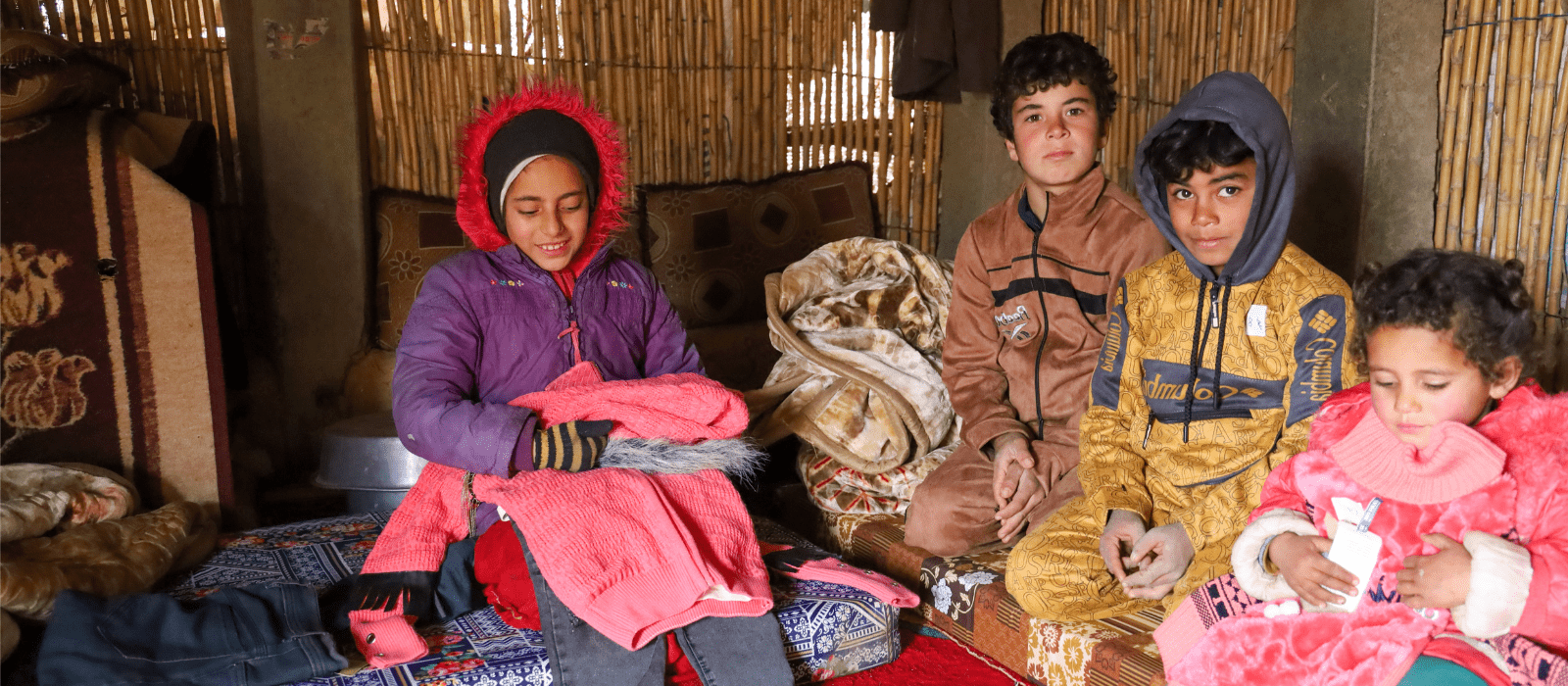
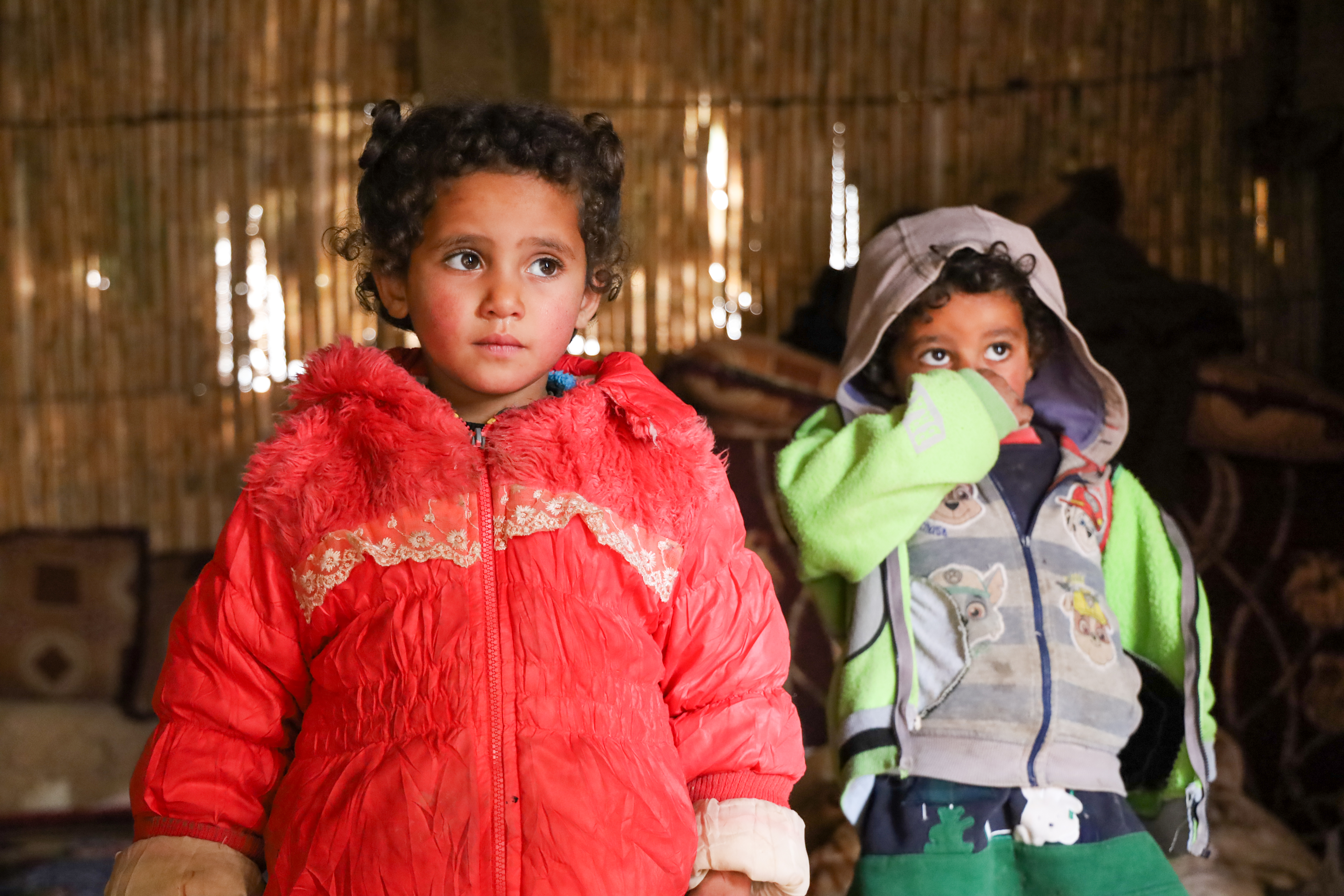
Today, the family works as laborers. The older boys help with plowing, harvesting, or any task they can find, and Umm Ismail and her husband work alongside them. The youngest children must spend their days inside the tent.
She describes their daily struggle:
“We all work together as laborers in the fields to cover our living expenses. We gather firewood, collect corn crops, and plow the land. We take any job available just to earn enough to eat.”
Winter brings the greatest hardship. The camp is swallowed by mud, and strong winds sweep across the plains, tearing through fragile tent coverings.
Each year, the family must somehow save enough to repair or replace their shelter. It is an expense that feels almost impossible on irregular daily wages.
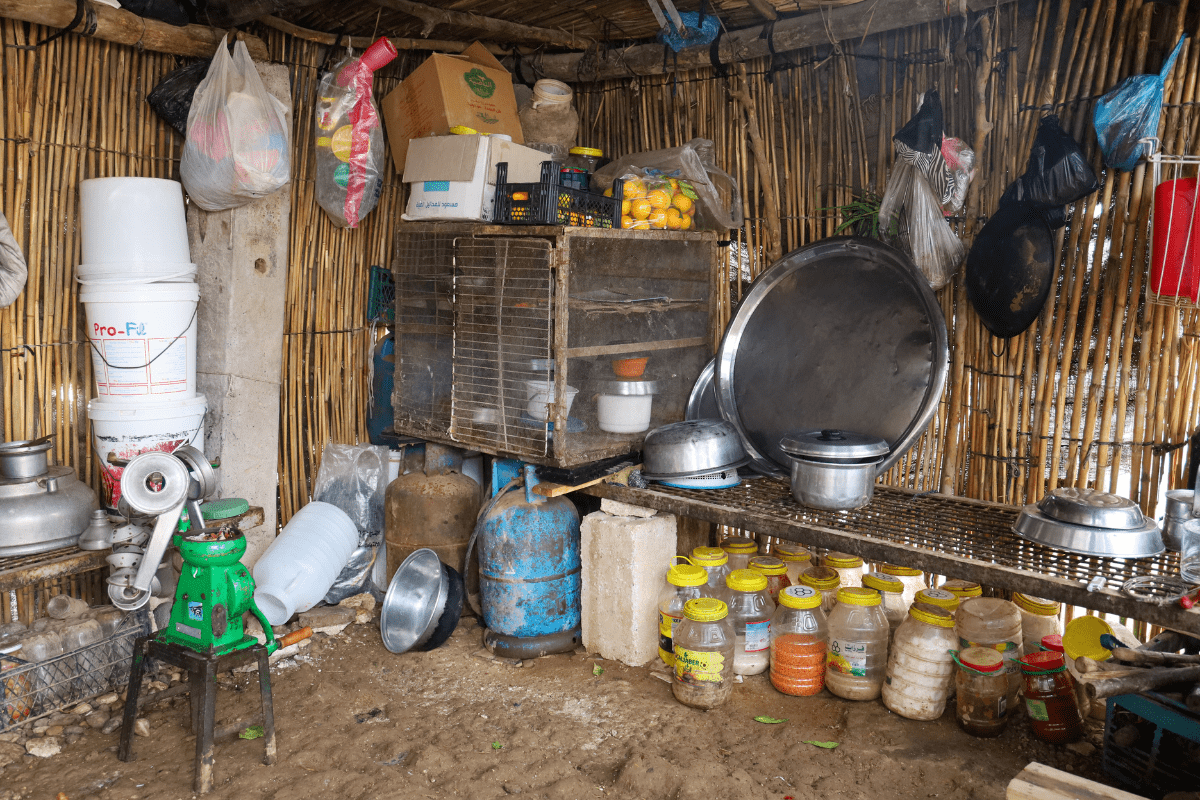
Looking around at their few belongings, Umm Ismail reflects on their living conditions:
“Our situation in the camp is very bad, especially in winter. We are surrounded by mud, and the wind tears our tents apart. Every year we need tarpaulins worth two million Syrian pounds (roughly $179) just to cover the tents, even though we are already struggling financially.”
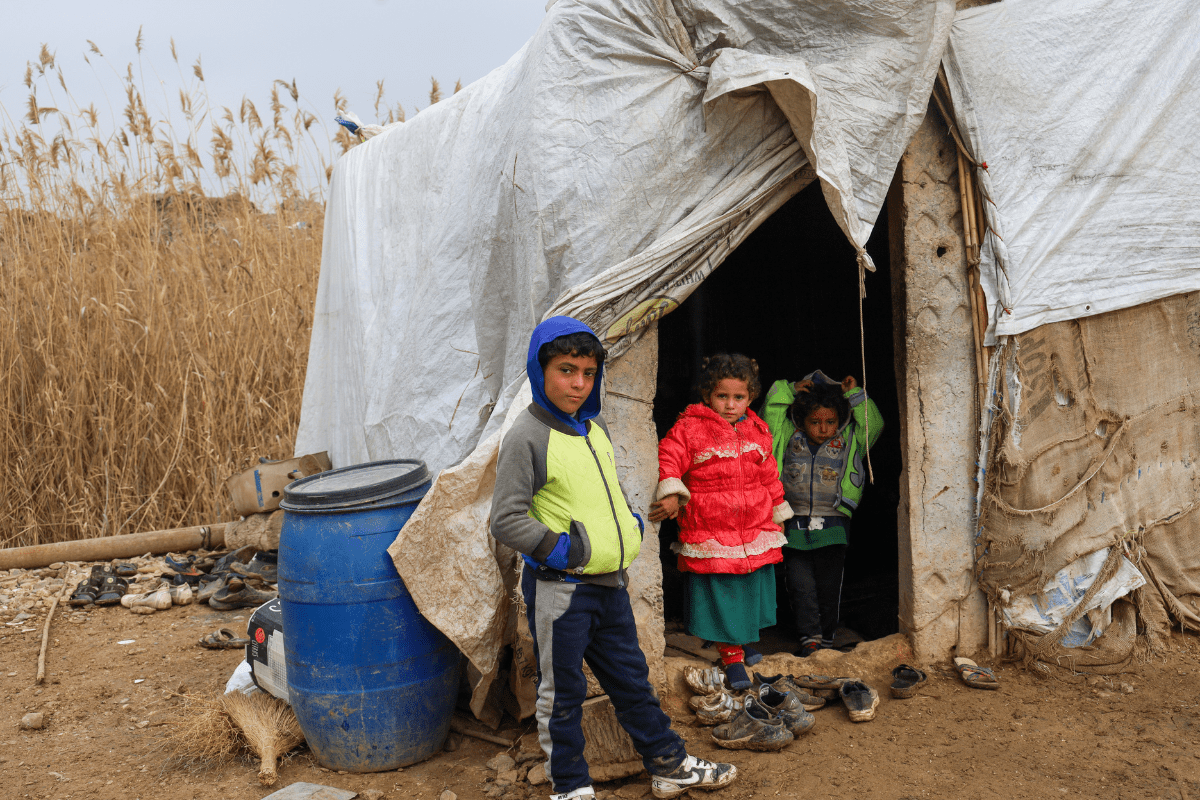
This year, however, brought a small but meaningful change. ShelterBox, working alongside our partner organization Bahar, as well as Relief Aid, has been working in Syria since 2012. We have helped families strengthen their shelters and cope with harsh seasonal conditions.
We received mattresses, blankets, tarps, and children’s clothes. They supported us through the winter. In previous years, without any assistance, it was so very hard. We’re thankful for every bit of help.
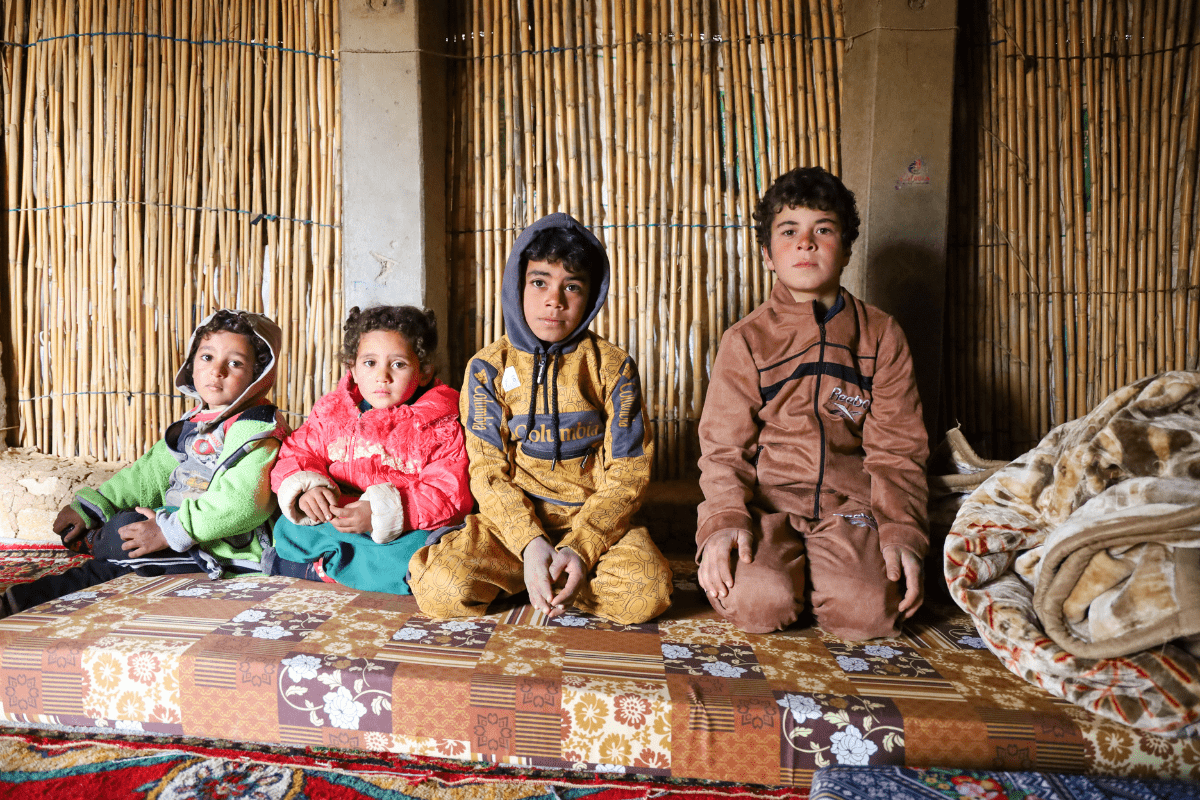
Despite the relentless struggle to survive each day, Umm Ismail holds firmly to one hope: to return home. She does not long for a perfect house but only to be back on her land, even if it means building a shelter from the ruins.
She is not alone. Thousands of families in informal settlements share the same dream of returning and rebuilding their lives.
“We wish to go back to our homeland and to our abandoned, destroyed homes,” Um Ismail says. “Living in the shade of one wall of our ruined house is better than living in these tents.”
It is this hope of home that gives Umm Ismail, her family, and so many others the strength to endure. Day after day, they face the uncertainty of life as seasonal laborers, living year-round in tents, holding on to the belief that one day they will return to their homelands.
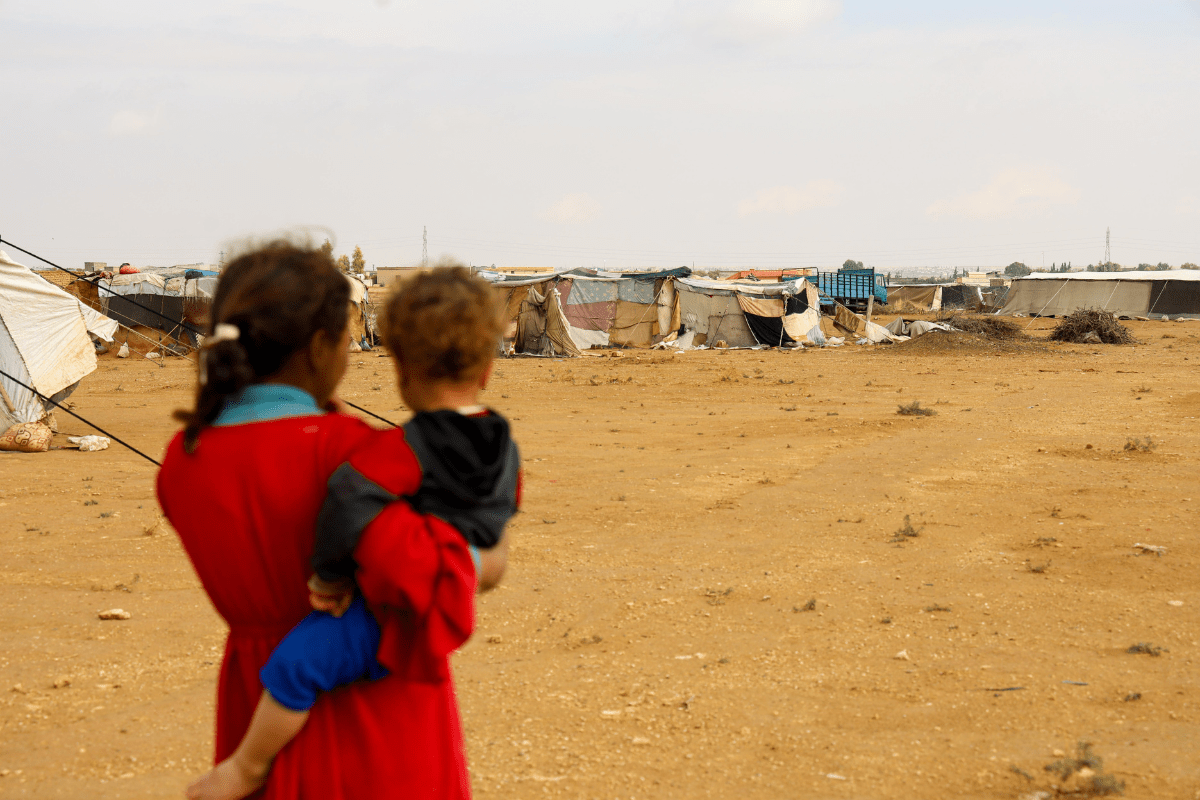
Since 2011, conflict has forced more than half of the population from their homes. Many families, like Umm Ismail’s, have spent years living in camps or temporary shelters.
Although there have been major changes in recent years, the situation remains unstable. Fighting continues in some areas, and more people are being displaced. Millions of people still rely on humanitarian support, with many living in damaged or temporary shelters.
Learn more about the causes of the crisis and how it continues to affect families across Syria.