
Each disaster is unique
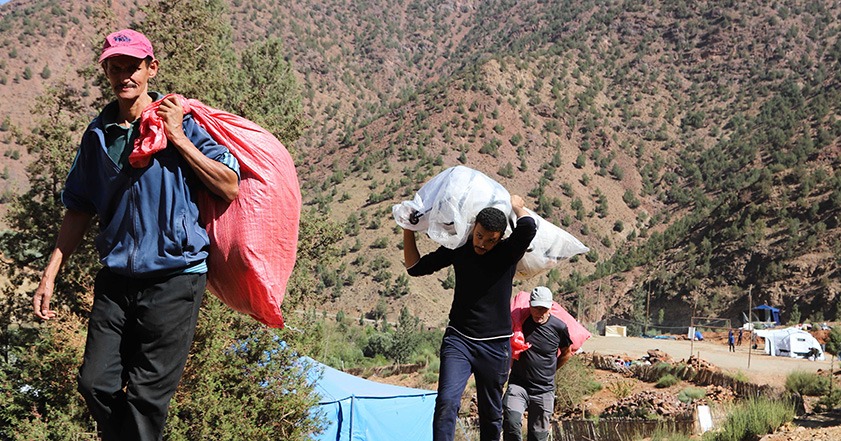
 ShelterBox team members went to Morocco to talk to people impacted the the earthquake there, and assess what aid was needed. Our team and volunteers also helped distribute the aid to support the communities.
Our flexible approach
 Noanga with his Sahelian tent in Burkina Faso. Such structures are familiar to the local people and suited to the climate in Burkina Faso. They are also more durable for those displaced long term.Because there’s no one size fits all approach to a disaster, we need to be flexible with the aid we offer. To do this we listen to what’s needed most and adapt our response every time. We put people and their needs at the heart of what we do. A big part of that involves building local partnerships. It helps us understand the local context, access local networks and supplies. We can reduce our impact on the planet by sending fewer aid items by air. Working with partners allows us to offer the aid that is needed when it is needed. By listening to affected communities and our partners, the support we offer is tailored for each response. That might mean providing tents, tarpaulins, blankets, mosquito nets, water filters and solar lights. It might mean supporting people to access cash or vouchers. With this they can choose the items they need most or pay for repairs on their homes. This respects their wishes and supports the dignity of those affected by disaster. It also helps kick start local economies. In other circumstances it might mean sourcing rental accommodation in urban areas. And we might offer more durable shelters where communities are likely to be displaced for a long time. In recent responses we’ve offered Sahelian tents in Burkina Faso as a more suitable local alternative to our standard tents. In Mozambique we’re working with local partners to train people in building transitional shelters. These more durable shelters are suitable for people who are likely to be displaced for over a year. Over in Yemen we’re helping with the construction of iron net shelters. These are far more familiar to locals and more suited to the harsh environment than tents. And in Pakistan we’re helping to construct durable shelters and latrines. This flexibility isn’t always easy. It takes time to understand the needs of people impacted by disaster. And this approach requires sustainable funding. But we feel it’s important to ensure we are giving the correct aid to the people who need it.
We’ve gone beyond the box

Looking forward


