About us
We provide emergency shelter to people who have lost their home to disaster, enabling them to rebuild their lives.
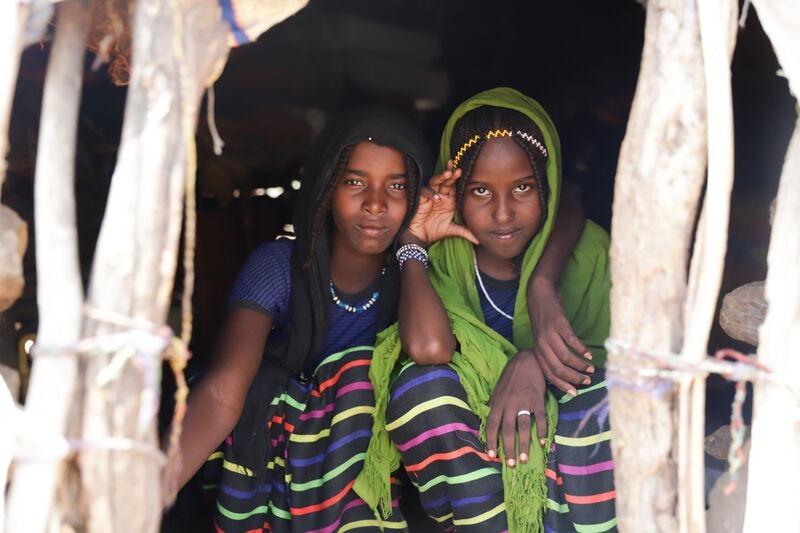


Conflict, climate change, and economic instability have left over 21 million people in need of humanitarian aid, more than half of whom are women and girls.
Violence in northern Ethiopia has caused widespread displacement, while five failed rainy seasons have led to the worst drought in 40 years. Seasonal floods and earthquakes since 2024 have displaced even more families.
One of the most notable armed conflicts has been in Tigray, where many people are now in need of humanitarian assistance and have been displaced. Although a ceasefire has now been agreed, the needs are still great. Other areas of Ethiopia have also seen significant conflict and displacement.
In addition to the conflict, the Horn of Africa has experienced five below-average rain seasons. People are struggling to meet their basic food and water needs, and are taking drastic action to survive.
Large numbers of people have left their homes because of the drought.
Rising food prices are making the situation worse. Below-average harvests and rising international prices, partly caused by the Ukraine conflict, have caused the cost of a food basket to increase by 66%.
When families are forced to flee, men are often separated or stay behind, leaving women to care for children and elderly relatives alone, with fewer resources and less protection. Women and girls face increased risks of gender-based violence, loss of shelter and belongings, unmet basic needs, and limited support for reintegration.
Donate now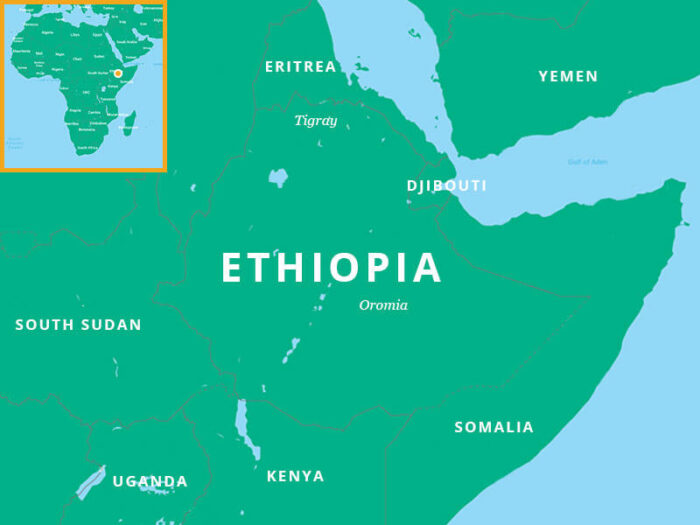
Ethiopia is a landlocked country in East Africa. It borders Eritrea, Djibouti, Somalia, Kenya, and Sudan.
It is a hugely diverse country, with ten ethnic regions.
The country is affected by four crises. The conflict in Tigray, the drought in the Horn of Africa, seasonal flooding in the West, Central, and Northern regions, and inter-communal violence. These crises have caused millions of people to leave their homes.
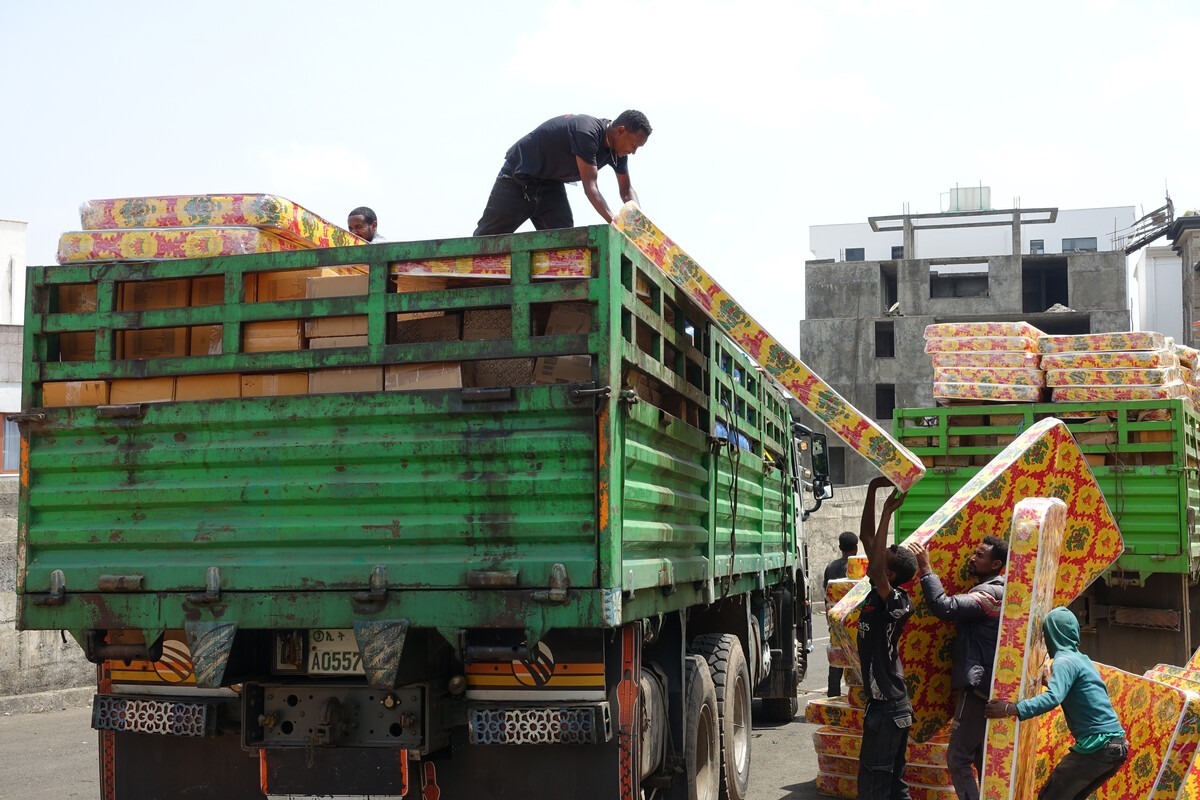
The crisis in Ethiopia has left millions of people in need. We have supported over 157,000 people in Ethiopia since 2018.
Working with our partner IOM, we have supported a total of 35,000 people in the Afar and Somali regions in the last year. Families have received shelter kit packages.
These contain: a tarpaulin, rope, sleeping mat, mosquito net, high thermal blanket, kitchen set, wash basin, jug, solar light, a jerry can for carrying water, and a non-food item bag, which provides essential living materials.
We have been supporting thousands of people, either displaced or returning home, in Tigray. This is in partnership with our partner, Positive Action for Development (PAD).
We’ve tailored our response for different communities because people living in low-lying areas need different support than people living in the highlands, which are cooler and less susceptible to flooding. We’ve also adjusted our aid to support people with disabilities.
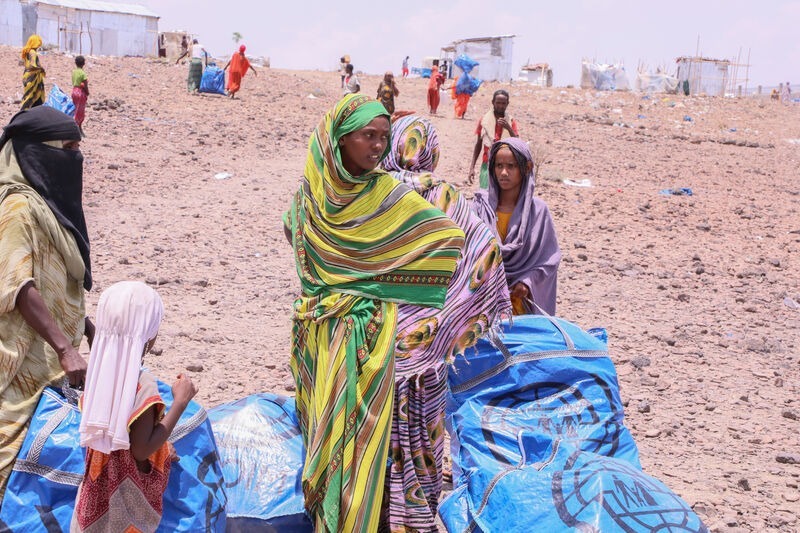
In Amhara, 88,000 displaced people live in overcrowded camps or out in the open, where poor lighting, lack of privacy, and limited security increase risks for women and girls.
Our support for families in North Shewa, Amhara, includes around 5,500 women. This aid includes emergency shelter kits, shelter repair kits with lockable doors and windows, and cash assistance so people can choose the materials and labour they need. Solar lights, kitchen sets, bedding, and dignity kits have also been provided.
Women receive training to build and maintain shelters, access to bank accounts to receive cash, and safe spaces to share feedback. A rapid gender analysis informed project design, including separate focus group discussions with women to ensure support meets their needs.
Findings from this analysis will inform future projects, including plans for secure, private washing and drying spaces for women and girls, designed and managed with women’s committees and local partners.
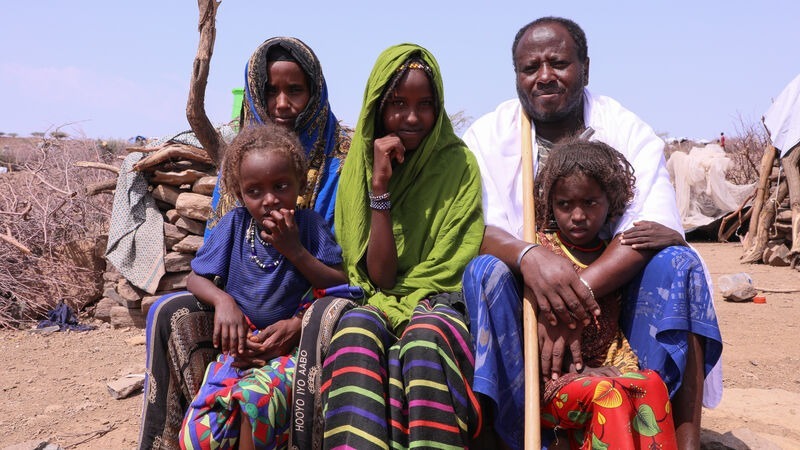
Kadir has been supported as part of our sixth project in Ethiopia which has helped him, and 7,000 households displaced by drought and conflicts.
Kadir was once a farmer. He and his family lost their home and livelihood due to drought. Long term health problems make his life more challenging. He explains the results of climate change on his land:
“We have been displaced twice before, and this is the third time. Previously, the land was suitable for livestock and we had regular rainfall. Now, the situation has changed and there has been no rain during the rainy season.”
I lost most of my livestock and came here with some of my goats before becoming empty-handed. I felt broken and worried about providing for my family, but support has given me hope.