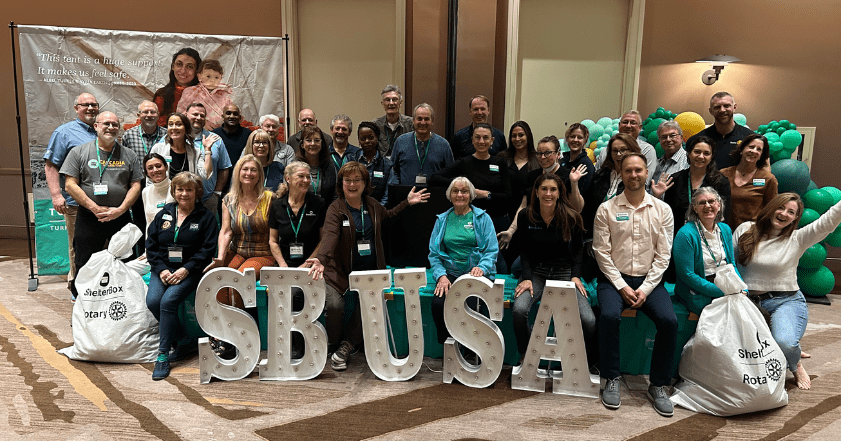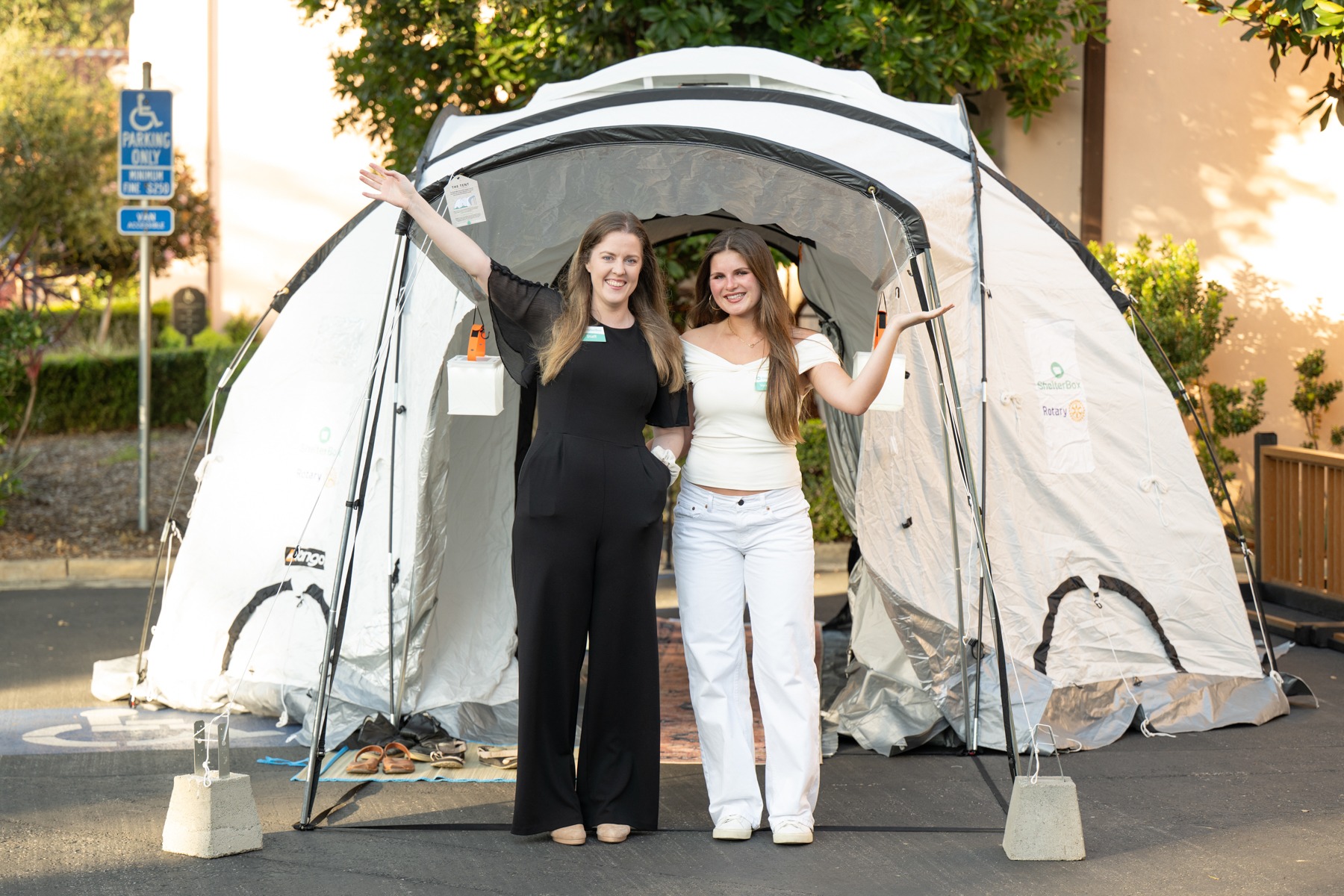
Reflections from a ShelterBox International Women’s Day Event
By Lola Keech, Student Intern & Ambassador for ShelterBox USA, San Marcos High School
In every disaster where ShelterBox has provided aid, there is more than just destruction. There are hidden stories of survivors and families navigating unimaginable loss. Women are the glue that holds communities together, as they begin rebuilding following disaster or conflict.
After attending my first ShelterBox International Women’s Day event as an intern and student ambassador, I now understand even more clearly the remarkable strength and resilience of women.
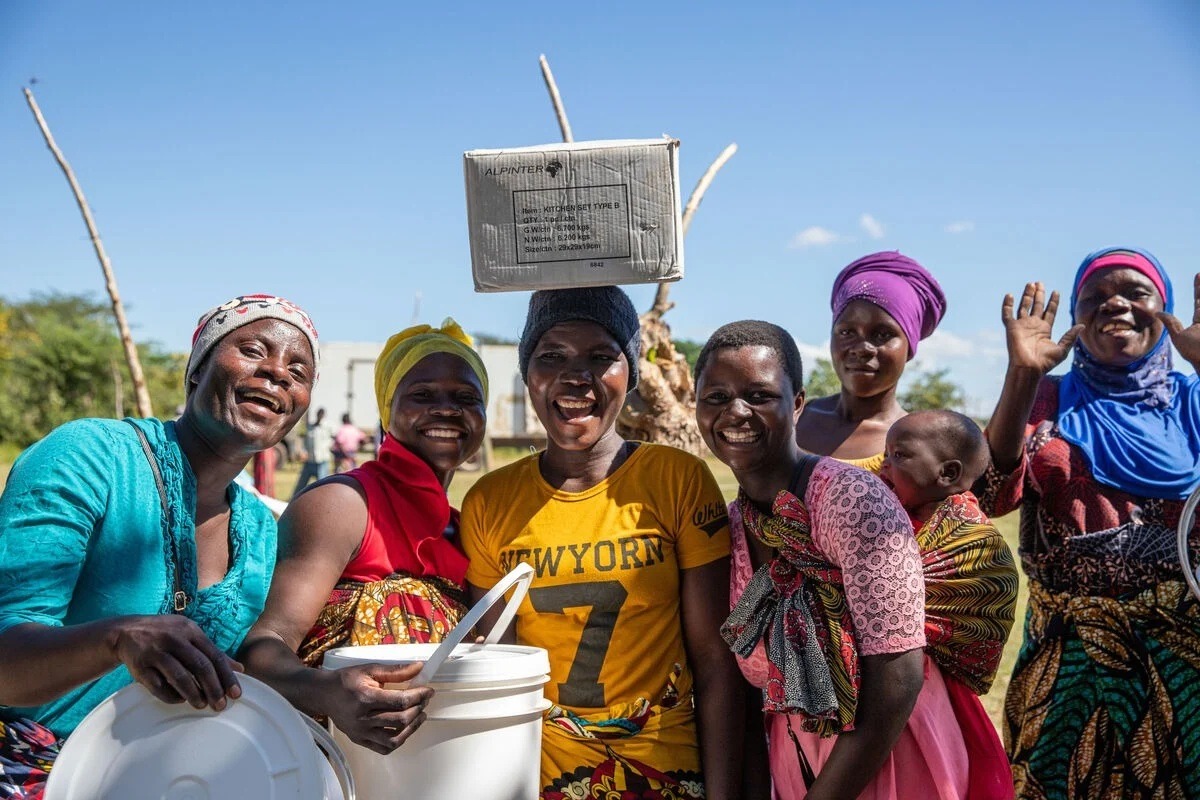
At the start of the evening, ShelterBox USA President Kerri Murray shared an important reality: when disasters strike around the world, women and children are the most affected. In some places, as many as 80% of people forced from their homes are women and children. Despite losing everything, it’s women who lead recovery. They rebuild. They organize. They carry their families forward.
That central theme, that women are both the most impacted and the most resilient, echoed through every story shared on the panel.
Although the women on stage at the Women’s Day event come from very different backgrounds, each of them shared experiences of adversity and rising above it.
Actress Jordana Brewster spoke honestly about growing up feeling like an outsider. She described herself as someone who closely observed people, studying their mannerisms and behaviors in order to understand where she fit in. She shared how being bullied and feeling different shaped her perspective.
She also spoke about the pressure women face in industries such as the entertainment business, where expectations constantly shift. One moment women are told to look younger, then older, thinner, fuller. The finish line is always moving.
Along the way, she realized an important lesson. “You cannot please everyone,” she explained. “I had to come to the conclusion that I have to be true to myself and not have that defined by outside forces.”
Her version of resilience wasn’t about perfection, even in an industry that often expects it. It was about authenticity — choosing a life that feels grounded and meaningful, instead of chasing impossible expectations.
Olympic medalist Brittany Brown shared a completely different story, but one that was equally powerful.
For years, she struggled financially while pursuing her dream of becoming a professional athlete. “I knew I belonged there,” she said.
She worked as a caregiver for Alzheimer’s patients, a daycare worker, and even a restaurant busser while training at an elite level.
At the same time, she was dealing with something invisible: severe pain caused by endometriosis, a condition that takes women an average of eight to nine years to be properly diagnosed. “I was the kid that was always sick,” she said.
Still, she never stopped believing she belonged on the track and intuition proved right. Brittany went on to compete in a world championship. After winning the race, she stood on the medal podium without a major sponsor, without branded attire and equipment, just herself, her resilience, and a pair of Vans sneakers.
Instead of letting shame or obstacles define her, she chose to write her own her story. “I had to own my story,” she said.
Her journey is a powerful reminder to forge ahead, even when the path is uncertain.
Karen Rasmussen brought another important perspective, focusing on safeguarding and protecting vulnerable people during humanitarian crises.
Karen has worked with major humanitarian organizations, including UNICEF, and is now the director and lead consultant at ChildSafe Horizons. She explained that safeguarding is the responsibility organizations have to ensure that people receiving aid are never put at risk.
“At the heart of safeguarding is the possibility of abuse of power,” she explained. “Any time someone has more power over another, there is the potential for abuse.”
Her work focuses on prevention, education, and creating systems where people feel safe reporting harm. “If we are uncomfortable talking about abuse,” Rasmussen began, “how do victims feel?”
Her message was clear: protecting people in vulnerable situations is just as important as providing them with resources.
Then there was Kim Cantin, whose story was devastating yet deeply moving.
In 2018, during the Montecito debris flow, her home was destroyed and she lost both her husband, Dave, and her teenage son, Jack. She described the terrifying moment when the disaster struck and how she was swept away by mud and water.
“I saw him wash away,” she bravely shared, describing the moment she lost her husband. She later woke up nearly two football fields away from where her home had once stood.
In the midst of unimaginable grief, something remarkable happened: her entire community showed up for her. Hundreds of people helped search for her son and other missing children and supported her family in the years that followed.
“There were always silver linings,” she said. “I got to witness some of the greatest kindness from humankind.”
Her story was heartbreaking and brought many people in the room to tears. But it also revealed something powerful about humanity — the importance of community and compassion during the hardest moments.
“All of our lives will pivot,” she said. “Anything you do to help someone else. You may not realize how much it helps them, but it really does.”
Listening to these women, I began to see how their stories connect to ShelterBox’s mission.
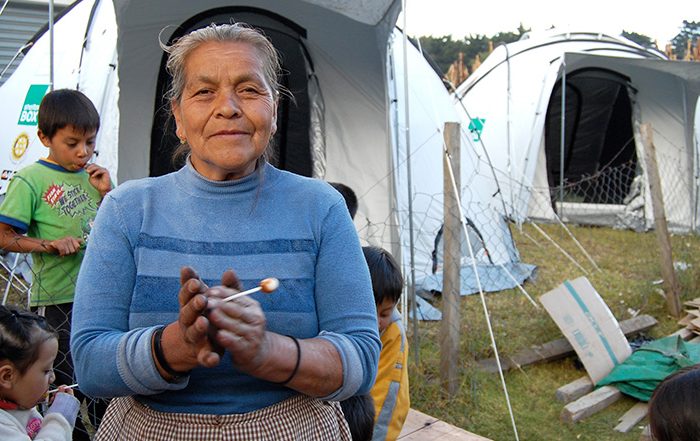
ShelterBox works around the world to provide emergency shelter and essential supplies to families who have lost everything due to disaster or conflict. When people are suddenly displaced, their homes gone, overnight, first step toward rebuilding is having a safe place to sleep, cook and begin again.
For women in disaster zones, shelter becomes the foundation for protecting their children and rebuilding their lives.
Before beginning my internship with ShelterBox, I didn’t fully understand how complex disaster recovery really is. Over the past months, I’ve learned just how much resilience exists among people who survive these crises.
Women are often the backbone of recovery. Whether rebuilding homes, caring for their families, protecting their communities, or advocating for change, women continue to move forward.
I’m only 16 years old, and this panel discussion completely changed how I see the world.
Watching these women speak about facing pressure, illness, injustice, and loss, helped me understand that perseverance does’t look the same for everyone.
Sometimes it’s standing on a podium after years of struggle.
Sometimes it’s speaking up about difficult truths.
Sometimes it’s rebuilding a life after tragedy.
And sometimes it’s simply choosing to keep going.
Being part of that mission, even as an intern, is one of the most valuable experiences I will carry with me. It has shown me how much positive impact the humanitarian work of one organization can have on the lives and well-being of families around the world.
President Kerri Murray shared that it could take 134 years to close the global gender gap. This is the index that benchmarks the current state and evolution of gender parity across four key dimensions: Economic Participation and Opportunity, Educational Attainment, Health and Survival, and Political Empowerment.
The estimate that it will take 134 years to reach equality between men and women may feel overwhelming. But ShelterBox’s International Women’s Day gathering reminds me that progress is not only possible but is already taking place.
When women share their stories, support one another, and stand together, resilience grows.
And that gives me hope.